
Nineteen US states have sued the Trump Administration over its “unlawful” decision to impose a USD 100,000 fee on new H-1B visa petitions, warning that the move will worsen labour shortages in key sectors such as health care, education and technology.
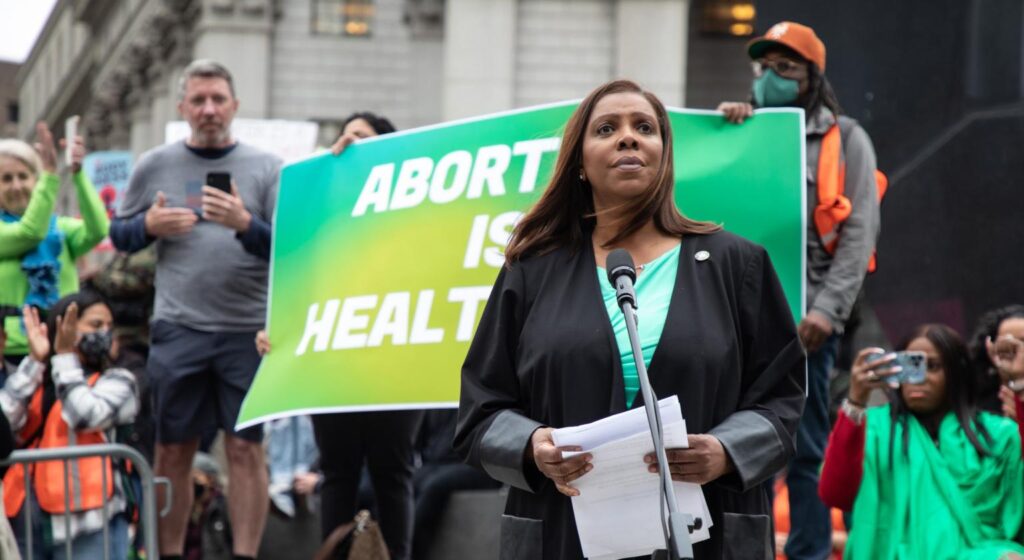
New York Attorney General Letitia James, along with 18 other attorneys general, on Friday filed the lawsuit in the US District Court for the District of Massachusetts, challenging what they termed a “massive” increase in H-1B fees without legal authority or due process.
The H-1B visa programme allows highly skilled foreign professionals to work temporarily in the United States and is widely used by Indian nationals.
The coalition argued that the new fee would make the programme effectively inaccessible for government and non-profit employers that depend on H-1B workers to provide essential services in health care, education, technology, and other fields.
“H-1B visas allow talented doctors, nurses, teachers, and other workers to serve communities in need across our country,” James said in a statement.
“The administration’s illegal attempt to ruin this programme will make it harder for New Yorkers to get health care, disrupt our children’s education, and hurt our economy. I will keep fighting to stop this chaos and cruelty targeting immigrant communities,” the statement added.
In September, US President Donald Trump had announced that his administration would levy a one-time USD 100,000 fee on all new H-1B applications, which the attorneys general described as a “sudden” and “massive” increase over existing charges.
The attorneys general contended that the imposition of the new fee was “unlawful” and that the move violated the Administrative Procedure Act as well as the Immigration and Nationality Act, as it was imposed without congressional approval or the required rule-making process.
Joining James in the lawsuit are the attorneys general of Arizona, California, Colorado, Connecticut, Delaware, Hawaii, Illinois, Maryland, Massachusetts, Michigan, Minnesota, North Carolina, New Jersey, Oregon, Rhode Island, Vermont, Washington, and Wisconsin.
The coalition said that the new fee on H-1B visas would severely restrict states’ ability to hire new workers under the programme to address labour shortages, disrupting access to education, health care, and other critical services.
This shortage of workers would be devastating for rural and underserved communities already facing shrinking workforces, it warned.
In New York alone, more than a third of health care workers are immigrants, while public universities and hospitals rely heavily on H-1B professionals, according to the lawsuit.
In New York’s 16 rural counties, there are currently four primary care physicians for every 10,000 people. New York’s hospitals already face a pervasive nursing shortage estimated to reach 40,000 nurses by 2030. A reduction in H-1B visa holders would only exacerbate this shortage, said the coalition.
Nationwide, the American Medical Association estimated that the US would face a shortage of 86,000 physicians by 2036, a shortage that H-1B workers would be critical in filling, the lawsuit said.
Across the US, at least 930 colleges and universities employ staff on H-1B visas. More than half of these institutions are public four-year universities, and more than 10 per cent are medical schools.
In New York, the State University of New York (SUNY) employs 693 employees on H-1B visas, including many who serve students in rural and suburban areas of New York state.
The coalition argued that limiting access to H-1B visas would lead to more crowded classrooms for students and disrupt critical research at leading universities.
Other critical industries in New York, such as technology, finance, and the arts, also rely on H-1B visa holders to fill essential roles. Across the state, more than 13,000 people on H-1B visas work in these sectors.
California Attorney General Rob Bonta said that Trump’s USD 100,000 H-1B visa fee created “unnecessary” and “illegal” financial burdens on California public employers and other providers of vital services, exacerbating labour shortages in key sectors.
“The Trump Administration thinks it can raise costs on a whim, but the law says otherwise. We are going to court to defend California’s residents and their access to the world-class universities, schools, and hospitals that make Californians proud to call this state home,” said Bonta.
Since the 1950s, the US has had a visa programme that allows skilled workers to temporarily live in America and work in specialised fields. The current version of the H-1B programme was created in the 1990s and allows employers to hire workers in a “speciality occupation” for a maximum of six years.