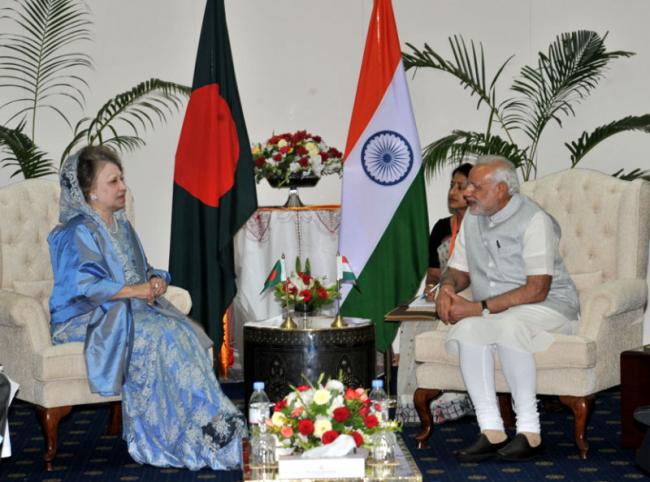
Indian PM Narendra Modi on Monday expressed concern over the health condition of ailing former Bangladesh PM Begum Khaleda Zia and extended all possible support to her.
In his X post, Modi said: “Deeply concerned to learn about the health of Begum Khaleda Zia, who has contributed to Bangladesh’s public life for many years. Our sincere prayers and best wishes for her speedy recovery. India stands ready to extend all possible support, in whatever way we can.”
BNP Secretary General Mirza Fakhrul Islam Alamgir, a top leader of Khaleda Zia’s political outfit, said the former PM’s health condition remained stable and she was receiving treatment under close monitoring by doctors.
The information was shared on Monday by BNP media cell member Shayrul Kabir Khan, quoting Mirza Fakhrul, reported Dhaka Tribune.
He said: “Madam’s condition is stable, and she is under intensive observation by the medical team. Some reports circulating in the media about her condition are not accurate. We urge everyone not to be misled.”
BNP Senior Joint Secretary General Ruhul Kabir Rizvi told reporters in Dhaka, as quoted by Dhaka Tribune, “Madam is receiving treatment as before at the Intensive Care Unit of Evercare Hospital. No one should be confused by what others may say about her condition.”
Zia, who has faced severe health issues following years of imprisonment under the Awami League government on corruption charges, was released from prison shortly after Hasina’s ouster. During Hasina’s tenure, Zia had been barred from travelling abroad for medical treatment.
The decades-long rivalry between Khaleda Zia and Sheikh Hasina has its roots in Bangladesh’s turbulent political history following the 1975 assassination of the country’s founding leader, Sheikh Mujibur Rahman. In the years after the coup, Ziaur Rahman—then a senior army officer—rose to power and later founded the Bangladesh Nationalist Party (BNP) in 1978. After his assassination in 1981, Khaleda Zia gradually assumed leadership of the BNP. Sheikh Hasina, who returned to Bangladesh the same year, became leader of the Awami League. Their rivalry intensified in the late 1980s and early 1990s as both leaders emerged as the main political forces shaping Bangladesh’s multiparty democracy.